
Barkley Hendricks' later portraits continue to reflect his profound impact on the art world, demonstrating his unique ability to capture the essence and personality of his subjects with vivid detail and historical depth. Through exhibitions like "Barkley L. Hendricks: Portraits at the Frick," which ran until January 7, 2024, viewers could witness the span of Hendricks' portrait work from the 1960s through the 1980s, highlighting his contributions to depicting Black life in metropolitan areas. Notably, this exhibition presented a unique opportunity to see Hendricks' work in dialogue with both the Old Masters that influenced him and contemporary artists he has inspired (Artsy).
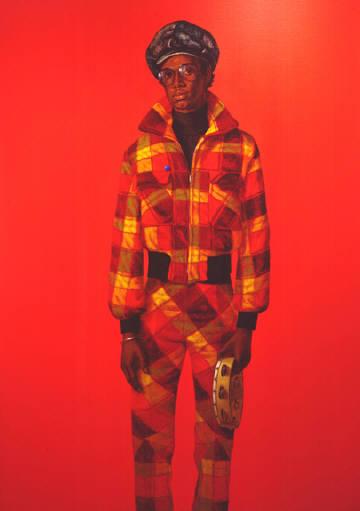
Hendricks’ work in this period includes portraits like "Blood (Donald Formey)" (1975), where the subject, a former art student of Hendricks at Connecticut College, is depicted against a bright red backdrop, wearing a plaid jacket and matching pants—a detail Hendricks added despite the reference photograph showing the subject wearing only the jacket. This choice exemplifies Hendricks’ approach to using his styling and editing skills directly on the canvas to deepen the viewer's understanding of his subjects (Artsy).
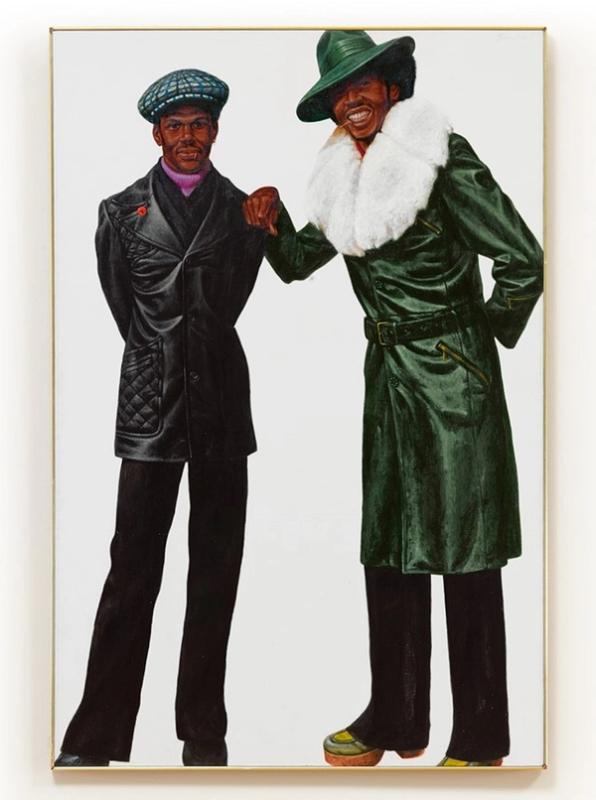
Furthermore, Hendricks' engagement with history is evident in works like "Lawdy Mama" (1969), where the subject's Afro and the backdrop of gold leafing recall Byzantine icons and Renaissance painting, and "APB’s (Afro-Parisian Brothers)" (1978), which showcases Hendricks’ skill in color, composition, and paint application. These paintings illustrate Hendricks’ ability to blend a variety of influences, from European Old Masters to the everyday people in his life, creating works that are both deeply personal and historically resonant (Artsy).
Hendricks' portraits from this era are not only a testament to his artistic mastery but also to his ability to convey the complexity, dignity, and beauty of Black individuals, making a significant statement in the representation of Black people in art. His work remains influential, bridging past and present and continuing to inspire both contemporaries and future generations of artists (Artsy) (Encyclopedia Britannica).