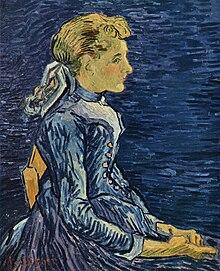
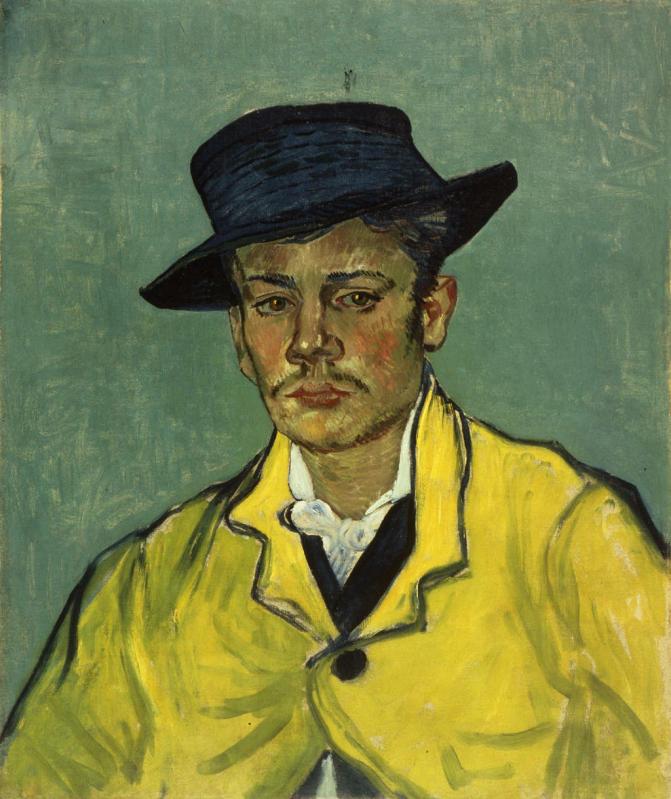
Vincent van Gogh's portraits of others are a significant and revealing part of his artistic legacy. These works not only demonstrate his evolving style and technique but also offer insights into his relationships with the people around him. Van Gogh was deeply interested in capturing the essence of his subjects, often focusing on individuals who were part of his immediate environment—friends, fellow artists, and local townspeople. His portraits are marked by a combination of empathy and psychological depth, reflecting his desire to convey more than just physical likeness.
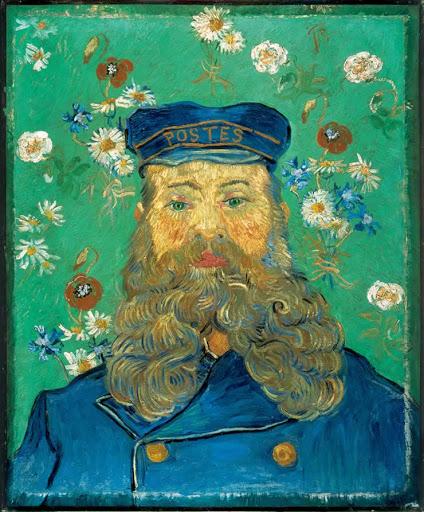
One of the most famous series of portraits that van Gogh created is that of Joseph Roulin, the postman in Arles. Van Gogh painted several versions of Roulin and his family, including "Portrait of the Postman Joseph Roulin" (1888) and "Madame Roulin and Her Baby" (1888). These works are characterized by their bold, expressive use of color and the simplicity of the composition, which highlights the dignity and warmth of the Roulin family. Van Gogh developed a close friendship with Joseph Roulin, and this is reflected in the sensitivity and care with which he portrayed him and his family (Encyclopedia Britannica) (The Metropolitan Museum of Art).
Another significant portrait is that of Dr. Paul Gachet, who cared for van Gogh during the final months of his life in Auvers-sur-Oise. The "Portrait of Dr. Gachet" (1890) is one of van Gogh’s most poignant works, capturing the melancholic and introspective nature of the doctor, who van Gogh described as having "the heart of an artist." The portrait is notable for its emotional intensity, with Gachet’s somber expression and the vibrant, swirling background reflecting van Gogh’s own turbulent state of mind during this period. This portrait has become one of van Gogh's most famous works and was sold in 1990 for a then-record sum, highlighting its significance in art history (Encyclopedia Britannica) (The Metropolitan Museum of Art).
Van Gogh also created numerous portraits of the peasants and laborers he encountered, particularly during his time in Nuenen and Arles. These works, such as "The Sower" (1888) and "Peasant Woman Against a Background of Wheat" (1890), reflect his deep empathy for the working class. Van Gogh sought to capture the nobility and resilience of his subjects, often using earthy tones and rough, expressive brushwork to convey the hardships of rural life. His portraits of peasants are infused with a sense of respect and admiration, as he viewed these individuals as closely connected to the natural world and embodying a fundamental human dignity (The Metropolitan Museum of Art).
Van Gogh's portraits are also significant for their exploration of color and form. Unlike traditional portraiture, which often prioritized realistic representation, van Gogh used color expressively to convey the mood and personality of his subjects. In "Portrait of Père Tanguy" (1887), a portrait of the art dealer Julien Tanguy, van Gogh surrounded the figure with bright, almost kaleidoscopic colors, reflecting Tanguy's warm personality and his role as a supporter of avant-garde artists. The unconventional use of color and pattern in this portrait exemplifies van Gogh's innovative approach to capturing the essence of his subjects through more than just physical resemblance (vangoghgallery).
Vincent van Gogh's portraits of others are a vital component of his artistic legacy. They showcase his unique ability to combine technical skill with deep emotional insight, creating works that resonate with viewers on a personal level. Through his portraits, van Gogh was able to convey the humanity and individuality of his subjects, making these works some of the most compelling and enduring in his oeuvre (Encyclopedia Britannica) (The Metropolitan Museum of Art) (vangoghgallery).