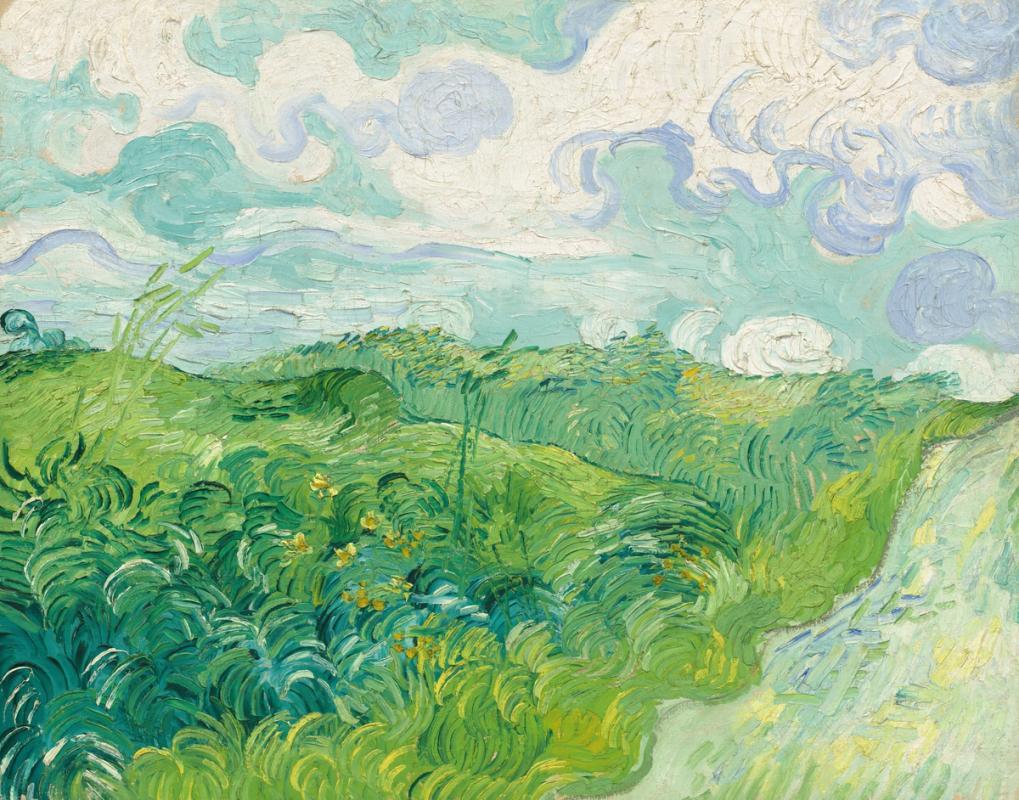
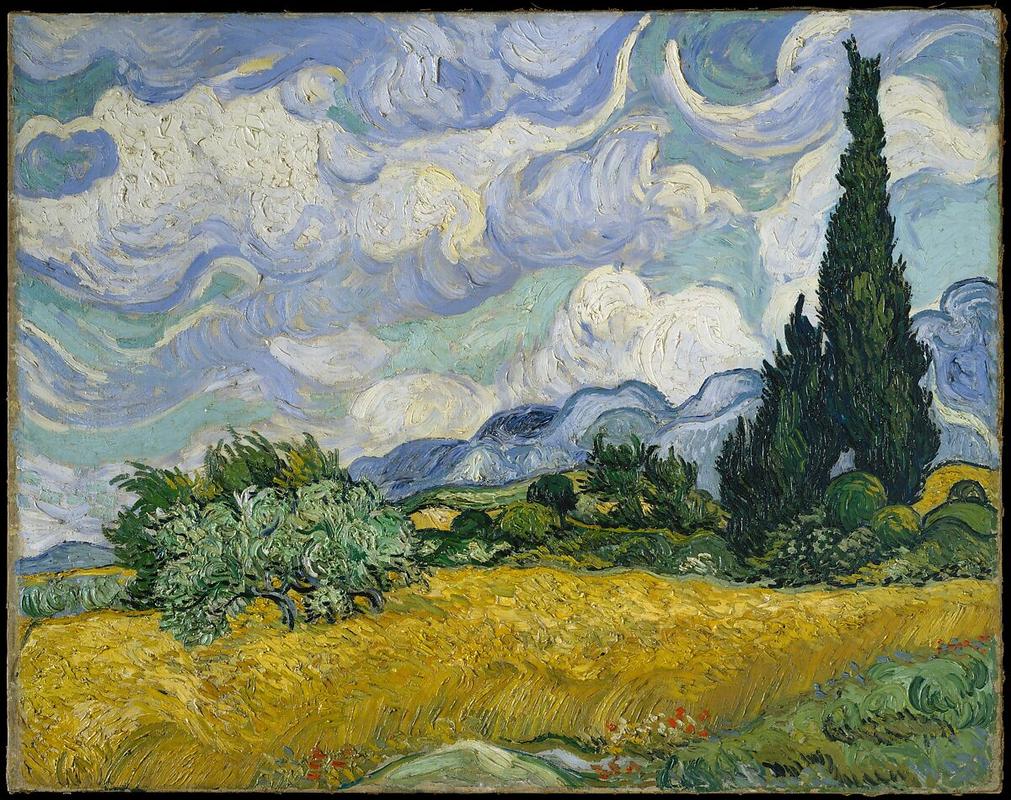
Vincent van Gogh’s Wheat Fields series is one of the most significant and evocative bodies of work he produced, particularly during the later years of his life. These paintings, created primarily between 1888 and 1890, depict the wheat fields around Arles and Saint-Rémy-de-Provence in southern France. The series is deeply symbolic, reflecting van Gogh’s fascination with the cycles of nature and his own turbulent emotions during this period. Through these works, van Gogh explored themes of life, death, and the eternal forces of nature.
The Wheat Fields series is marked by van Gogh’s characteristic use of vibrant colors and dynamic brushwork. In works like Wheatfield with Crows (1890), one of his last paintings, the wheat fields are depicted under a dark, ominous sky, with crows flying overhead. The painting is often interpreted as a reflection of van Gogh’s mental state in the final weeks of his life, with the dramatic contrasts and the path leading into the field suggesting a sense of despair and isolation. The crows, traditionally symbols of death, add to the painting’s ominous tone, making it one of the most poignant pieces in the series (The Metropolitan Museum of Art) (Van Gogh Biography).
Another notable work in the series is Wheatfield Under Thunderclouds (1890), which van Gogh painted shortly before his death. This painting, like many others in the series, showcases his ability to convey the immense power and beauty of nature. The dark, looming clouds above the golden wheat field create a striking contrast, evoking the tension between life’s fragility and the overwhelming forces of nature. Van Gogh’s bold brushstrokes and use of color give the scene a sense of movement and energy, as if capturing a moment just before a storm (The Metropolitan Museum of Art) (vangoghgallery).
In addition to these more somber pieces, van Gogh also painted wheat fields in a more tranquil and harmonious light. In Wheatfield with a Reaper (1889), for example, the reaper is seen as a symbol of the cycle of life and death, harvesting the wheat under a bright, golden sky. The painting is filled with warm, rich colors, and the reaper is portrayed almost as a part of the landscape, blending into the field. Van Gogh described this painting as expressing "the idea of the eternal cycle of life" and saw the reaper as a comforting figure rather than a harbinger of death (Van Gogh Biography) (vangoghgallery).
The Wheat Fields series also includes more peaceful depictions, such as Wheatfield with a Lark (1887), which shows a lark soaring above a sunlit field. This painting, with its light palette and serene atmosphere, contrasts with the darker, more intense works in the series. It reflects van Gogh’s moments of peace and connection with nature, capturing the beauty of the Provençal landscape in its most idyllic form (Encyclopedia Britannica) (The Metropolitan Museum of Art).
The Wheat Fields series is a powerful testament to van Gogh’s ability to convey the profound and often conflicting emotions he experienced through his art. The series is a meditation on the cycles of nature, the passage of time, and the inevitability of death, all themes that were deeply significant to van Gogh. Today, these paintings are celebrated not only for their technical brilliance but also for the deep emotional and philosophical questions they raise, making them some of the most enduring and moving works in van Gogh’s oeuvre (Van Gogh Biography) (vangoghgallery).