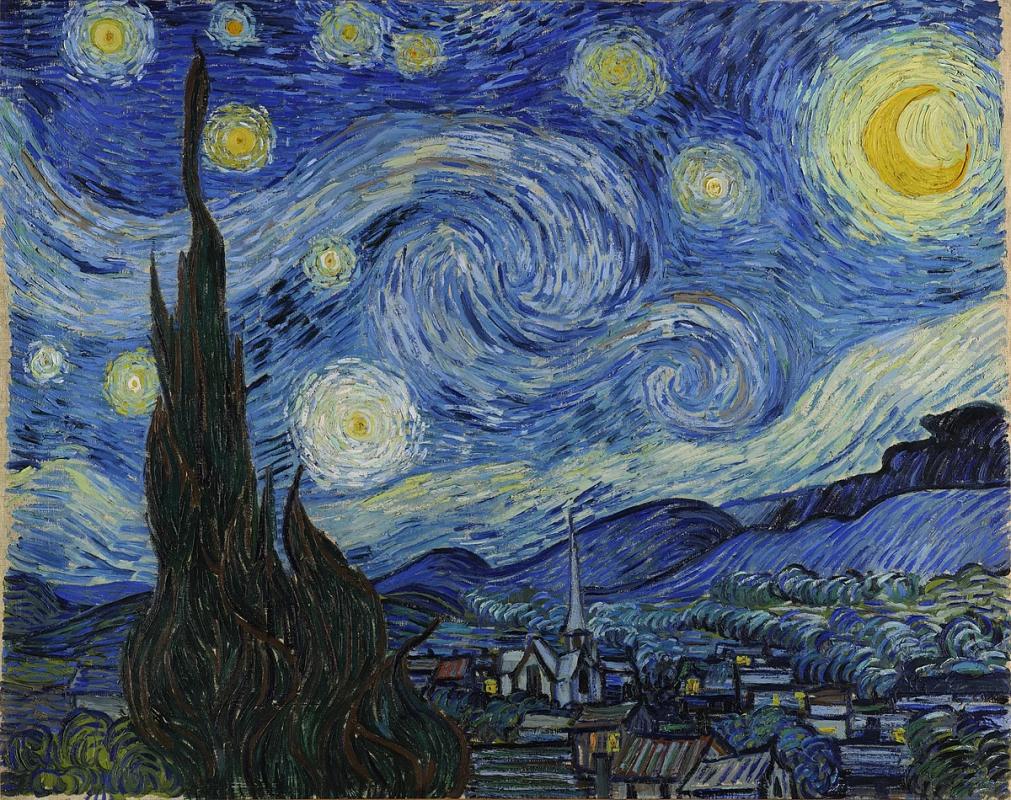
Vincent van Gogh's The Starry Night series is among his most iconic works, embodying his unique style and emotional depth. This series, which includes the renowned painting The Starry Night (1889), was created during his stay at the Saint-Paul-de-Mausole asylum in Saint-Rémy-de-Provence, where he sought treatment for his mental health issues. The series captures van Gogh's fascination with the night sky, blending realism with his imaginative vision to create some of the most expressive and powerful images in Western art.
The most famous painting in the series, The Starry Night, was painted in June 1889. It depicts a swirling night sky over the quiet village of Saint-Rémy, with a large cypress tree in the foreground and a luminous crescent moon and stars dominating the sky. Van Gogh's use of vibrant blues and yellows, combined with dynamic, swirling brushstrokes, creates a sense of movement and energy that reflects the intensity of his emotions at the time. The painting is often interpreted as a reflection of van Gogh’s turbulent mental state, as well as his deep connection to the natural world (Encyclopedia Britannica) (vangoghgallery).
Another notable work in the series is Starry Night Over the Rhône (1888), painted earlier in Arles. This painting shows a quieter, more peaceful night scene, with stars reflecting on the water of the Rhône River and the lights of the town shining in the distance. Unlike The Starry Night, which is more abstract and emotionally charged, Starry Night Over the Rhône captures a more serene and romantic view of the night. The composition still features van Gogh's characteristic use of color and light, but with a softer, more contemplative mood (The Metropolitan Museum of Art) (Van Gogh Biography).
These two paintings, along with other related works like The Road with Cypress and Star (1890), demonstrate van Gogh’s evolving approach to the depiction of night scenes. While Starry Night Over the Rhône emphasizes reflection and tranquility, The Starry Night and The Road with Cypress and Star convey a more intense, almost cosmic experience of the night, with swirling skies that suggest both the vastness of the universe and the artist's own internal struggles (The Metropolitan Museum of Art) (World History Encyclopedia).
The Starry Night series is significant not only for its artistic innovation but also for the insight it provides into van Gogh's psyche. The paintings reflect his ongoing exploration of light, color, and movement, as well as his desire to capture the emotional and spiritual essence of the world around him. These works have had a lasting impact on the art world, influencing countless artists and becoming some of the most recognizable and celebrated images in art history (Encyclopedia Britannica) (vangoghgallery).