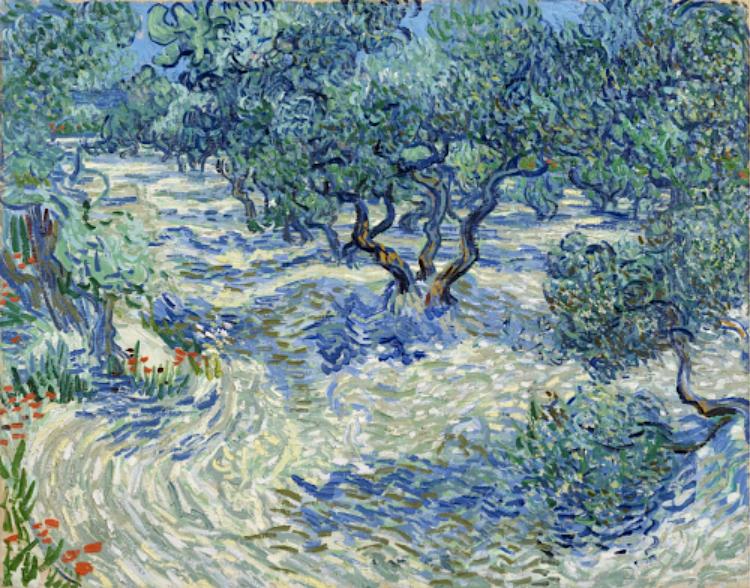


Vincent van Gogh's Olive Trees series is a remarkable body of work created during his time at the Saint-Paul-de-Mausole asylum in Saint-Rémy-de-Provence between 1889 and 1890. This series, comprising approximately 15 paintings, is a vivid exploration of the natural landscape surrounding the asylum, particularly the olive groves that captivated van Gogh's attention. The Olive Trees series stands out for its expressive use of color, dynamic brushwork, and the profound connection it reveals between the artist and the natural world.
Van Gogh’s fascination with olive trees began shortly after his arrival at the asylum. The olive groves, with their twisting trunks and dense foliage, offered van Gogh a subject that was both challenging and deeply resonant. He saw in the olive trees a reflection of the rugged beauty and resilience of nature, which mirrored his own struggles with mental health. In these paintings, van Gogh employed his characteristic bold brushstrokes to capture the movement and vitality of the trees, often rendering them in swirling, rhythmic patterns that convey a sense of energy and life (Encyclopedia Britannica) (The Metropolitan Museum of Art).
The color palette of the Olive Trees series is particularly noteworthy. Van Gogh used a range of vibrant greens, blues, and yellows to depict the trees, often contrasting these with the rich tones of the Provençal earth and sky. The colors in these paintings are not merely descriptive but are also used symbolically to convey the emotional and spiritual significance of the landscape. In works like Olive Trees with the Alpilles in the Background (1889), van Gogh’s use of color creates a sense of harmony and unity between the earth and the sky, reflecting his deep connection to the natural environment around him (The Metropolitan Museum of Art) (Van Gogh Biography).
Van Gogh’s Olive Trees series also reflects his ongoing exploration of religious and spiritual themes. He often compared the olive trees to figures in biblical stories, seeing in them symbols of endurance and faith. This is particularly evident in works like The Olive Trees (1889), where the trees are depicted with an almost human presence, their gnarled trunks and twisted branches suggesting both suffering and strength. The spiritual undertones of these paintings are further emphasized by the intense, almost mystical quality of the light that pervades the scenes (vangoghgallery).
The Olive Trees series, like much of van Gogh’s work, was not widely recognized during his lifetime, but it has since become one of the most celebrated parts of his oeuvre. These paintings are admired not only for their technical brilliance but also for the deep emotional and spiritual resonance they convey. Today, the Olive Trees series is seen as a powerful testament to van Gogh’s ability to find beauty and meaning in the natural world, even in the face of personal adversity (The Metropolitan Museum of Art) (Van Gogh Biography).