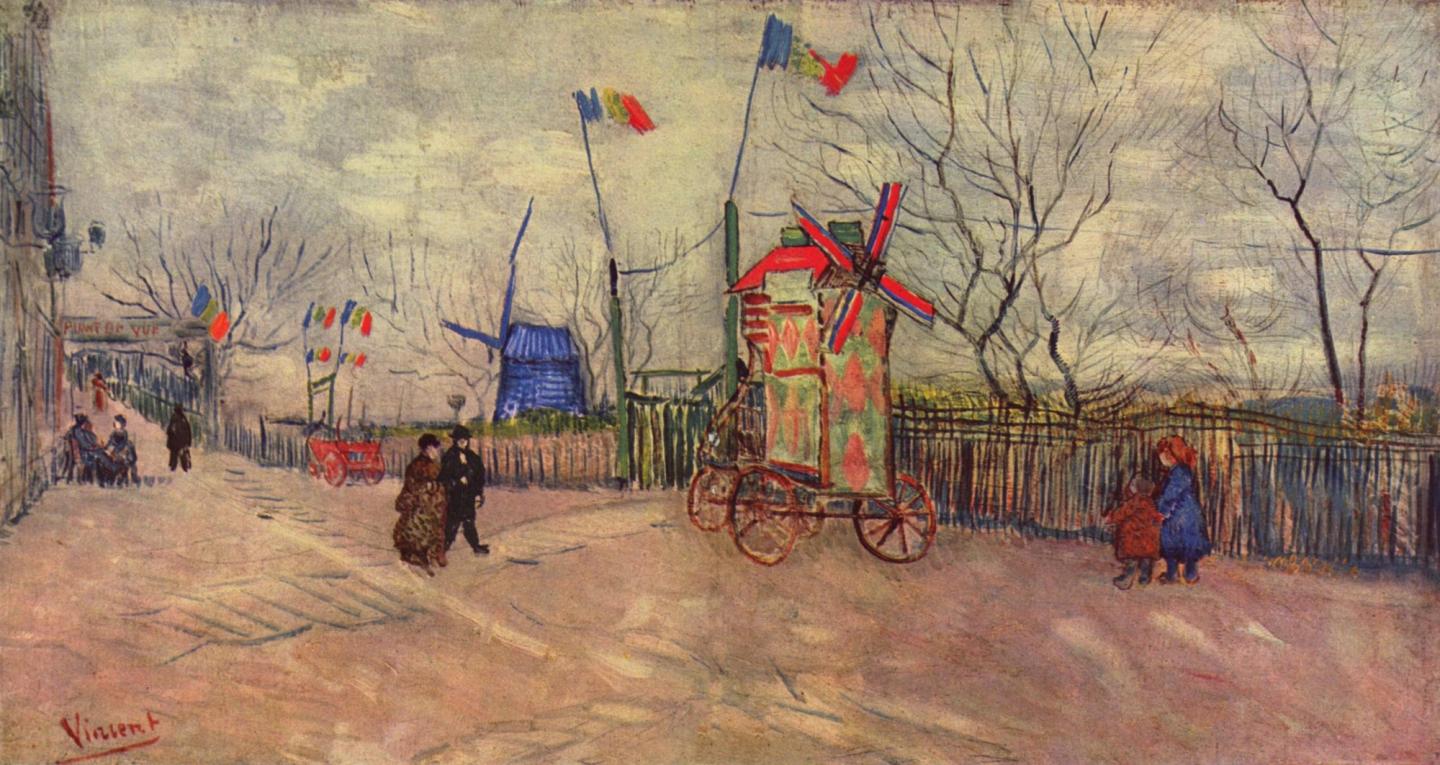
During his time in Paris from 1886 to 1888, Vincent van Gogh underwent a significant transformation both in his artistic style and in the subjects he chose to paint. This period, often referred to as his "Parisian period," marked a departure from the darker, more somber tones of his earlier works and introduced a brighter palette and more varied subject matter, influenced by the burgeoning art movements he encountered in the city.
In Paris, van Gogh was exposed to the works of the Impressionists and Neo-Impressionists, whose emphasis on light, color, and everyday scenes had a profound impact on him. He began to adopt a lighter, more vibrant palette, moving away from the dark, earth-toned colors of his previous works. This change is evident in his numerous paintings of Parisian scenes, where he captured the bustling energy of the city and its surroundings. His works from this period include a variety of urban landscapes, still lifes, and portraits that reflect his growing interest in capturing the immediacy of modern life (World History Encyclopedia).
Among the notable subjects van Gogh explored in Paris were the iconic windmills of Montmartre, the vibrant streets of the city, and the scenic views of the Seine River. The "Montmartre" series, for instance, features paintings of the windmills that dotted the hillside of this famous Parisian district. These works, such as "Montmartre: Windmills and Allotments" (1887), showcase his evolving use of color and his interest in the interplay of light and shadow, a technique he had begun to develop under the influence of Impressionism (World History Encyclopedia) (vangoghgallery).
Van Gogh also became fascinated with the vibrant nightlife of Paris, which he depicted in works like "Le Moulin de la Galette" (1886). This painting captures the lively atmosphere of one of the city's popular dance halls, using bold brushstrokes and a bright color palette to convey the energy and movement of the scene. The influence of Japanese ukiyo-e prints, which van Gogh admired greatly, is also evident in the flattened perspective and decorative use of color seen in these works (vangoghgallery).
Additionally, van Gogh's time in Paris allowed him to experiment with portraiture, leading to a series of self-portraits that document his evolving style and psychological state. These self-portraits are not just representations of his physical appearance but also explorations of his inner self, marked by expressive brushwork and a striking use of color. The "Self-Portrait with Grey Felt Hat" (1887), for example, shows van Gogh experimenting with the divisionist technique, where small, distinct strokes of color are applied to create a more vibrant overall effect (Encyclopedia Britannica) (World History Encyclopedia).
Van Gogh's Parisian scenes represent a critical phase in his artistic development. This period allowed him to break away from his earlier, more traditional style and embrace the modernist influences that would define his later works. The bright, expressive colors and dynamic compositions he developed during this time would become hallmarks of his mature style, influencing not only his future works but also the direction of modern art.