Vincent van Gogh's Auvers-sur-Oise series represents the final chapter of his artistic career, created during the last months of his life from May to July 1890. After leaving the asylum in Saint-Rémy-de-Provence, van Gogh moved to Auvers-sur-Oise, a small town north of Paris, where he sought to continue his recovery under the care of Dr. Paul Gachet. During this period, van Gogh was extraordinarily productive, creating more than 70 paintings in just over two months. The Auvers-sur-Oise series is characterized by a sense of urgency, vibrant color, and an intense focus on the landscape and architecture of the village, reflecting both van Gogh's continued passion for his work and his underlying emotional turmoil (Encyclopedia Britannica) (The Metropolitan Museum of Art).
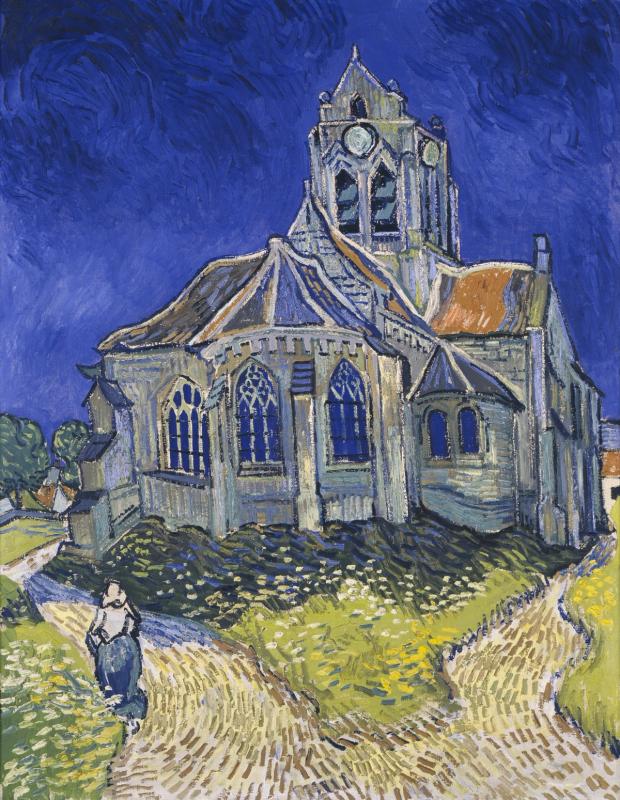
One of the most famous paintings from this series is The Church at Auvers (1890), which depicts the village church with its Gothic architecture and dark, foreboding sky. Van Gogh used bold, swirling brushstrokes to convey a sense of movement and unease, with the church appearing almost as a living entity. The vivid contrasts between the dark blue of the building and the bright green of the surrounding landscape emphasize the dramatic, almost surreal quality of the scene. This painting is often interpreted as a reflection of van Gogh's inner conflict, with the imposing structure of the church symbolizing his feelings of isolation and spiritual anxiety (The Metropolitan Museum of Art) (vangoghgallery).
Another significant work from this period is Wheatfield with Crows (1890), often considered one of van Gogh's final paintings. The image of a vast wheat field under a turbulent sky, with crows flying overhead, is both beautiful and haunting. The intense yellow of the wheat contrasts sharply with the deep blue of the sky, creating a sense of tension and foreboding. The winding path that cuts through the field, leading to an uncertain destination, is often seen as symbolic of van Gogh's own life journey, filled with uncertainty and despair. The crows, traditionally associated with death, add to the painting's ominous tone, making it a powerful expression of van Gogh's troubled state of mind during his last days (Encyclopedia Britannica) (Van Gogh Biography).
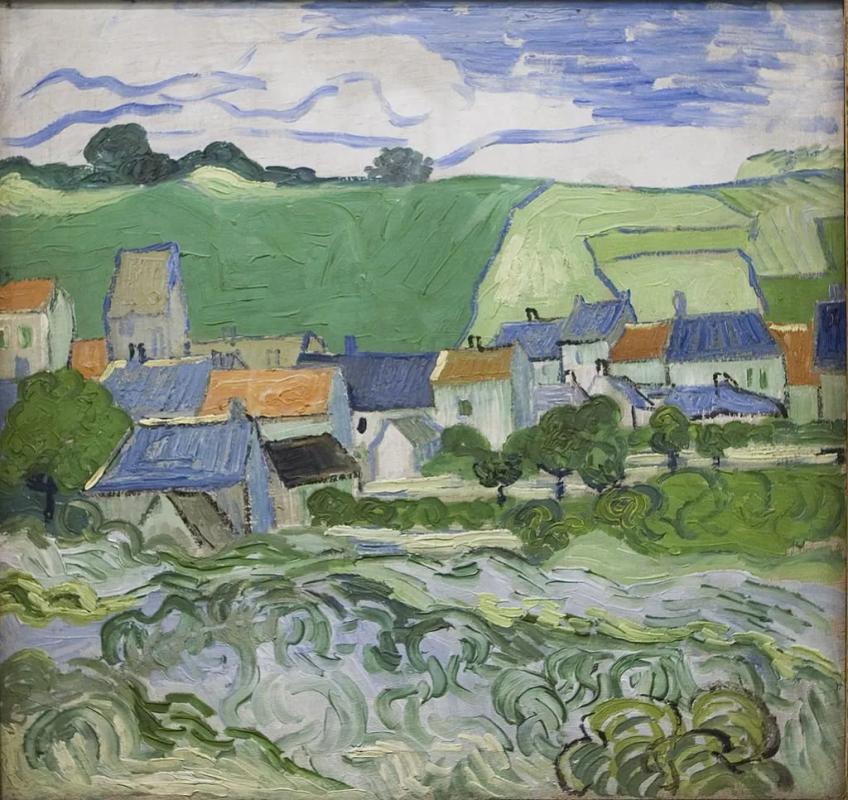
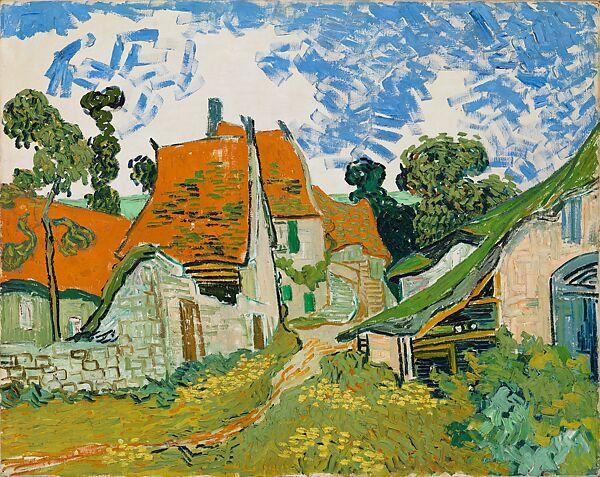
In addition to these dramatic landscapes, van Gogh also painted more tranquil scenes in Auvers, such as Thatched Cottages and Houses (1890) and Houses at Auvers (1890). These works depict the quaint, rustic charm of the village, with their simple, almost idyllic depictions of rural life. The use of bright, warm colors and flowing brushstrokes creates a sense of peace and harmony, contrasting with the more turbulent works in the series. These paintings reflect van Gogh's deep appreciation for the natural beauty of the countryside and his ability to find solace in the quiet moments of rural life (The Metropolitan Museum of Art) (vangoghgallery).
The Auvers-sur-Oise series is not only a testament to van Gogh's incredible productivity and artistic mastery during the final months of his life but also a poignant reflection of his emotional and psychological struggles. The works from this period are infused with a sense of urgency and intensity, capturing both the beauty and the pain that van Gogh experienced. Today, these paintings are among the most celebrated and studied in van Gogh's oeuvre, offering deep insights into the mind of one of history's greatest artists (Encyclopedia Britannica) (Van Gogh Biography).